The Endings They Didn’t Want You to See
How Dallas filmed decoys, false clues and alternate scenes to keep the press and viewers off the scent
Before spoiler culture became an industry of its own, Dallas was already mastering the art of misdirection. The show did not simply end seasons with cliffhangers — it protected them. Producers filmed alternate scenes, created false visual clues and let the press run with theories that were never meant to be true. It was a clever way to preserve suspense in an era when major television twists could dominate newspapers, magazines and water-cooler conversation for months.
That strategy became one of the show’s secret weapons. In several of Dallas’s biggest mystery storylines, the production did more than guard the real outcome — it actively created convincing alternatives. Some of those decoys have since become part of the show’s legend: multiple cast members filmed shooting J.R. Ewing, alternate women posed as the body in the Southfork pool, and a false Bobby-return sequence teased a completely different explanation for his reappearance. They were scenes designed not to air, but to mislead — and they worked beautifully.
Everybody shot J.R.
The most famous example remains “Who Shot J.R.?” When J.R. Ewing was gunned down in the season-three finale, television history changed. The mystery became a worldwide obsession, with fans, journalists and bookmakers all trying to predict the culprit before the answer was finally revealed. Dallas understood that the bigger the story became, the more dangerous any leak could be.
So the producers fought back in the smartest possible way: they reportedly filmed multiple versions of the shooting scene, using different cast members as the gunman. That meant that even if photos, rumors or fragments of information slipped out, they could not be trusted. Anyone might appear guilty. Everyone was a suspect. It was an ingenious way of protecting the real solution while at the same time feeding the atmosphere of hysteria around the mystery.
When the answer finally came and Kristin Shepard was revealed as the shooter, it landed with maximum impact because the production had done such an effective job of muddying the waters. The famous question was not just preserved by secrecy — it was protected by carefully manufactured confusion.
Alternative versions of the shooting were filmed to help keep the identity of J.R.’s attacker a secret.
The body in the Southfork pool
A few years later, Dallas used the same trick again in one of its most haunting mystery images: the woman’s body floating face down in the Southfork swimming pool as Cliff Barnes discovers her, with J.R. looking on. On screen, the dead woman turned out to be Kristin Shepard. But behind the scenes, the production once again took steps to make sure the truth stayed hidden.
Alternate versions of the pool scene were also created using other major female characters, and one surviving photo shows Sue Ellen as the apparent dead body in the pool. That image alone is a remarkable piece of Dallas history, because it proves just how far the show was willing to go in order to protect a storyline. Rather than simply keeping the real victim secret, the producers created entirely false but believable alternatives that could mislead anyone who saw a still photograph or heard a rumor from the set.
Sue Ellen was an especially effective decoy. Given her bitter, destructive relationship with J.R., a photograph of her floating dead in the Southfork pool would have seemed entirely plausible to fans. Pamela Ewing was also reportedly filmed as an alternate victim, adding another layer of uncertainty. It was classic Dallas: do not merely hide the truth — surround it with convincing lies. Kristin’s death was the official answer, but the surviving Sue Ellen pool image remains one of the clearest examples of the show’s behind-the-scenes spoiler strategy.
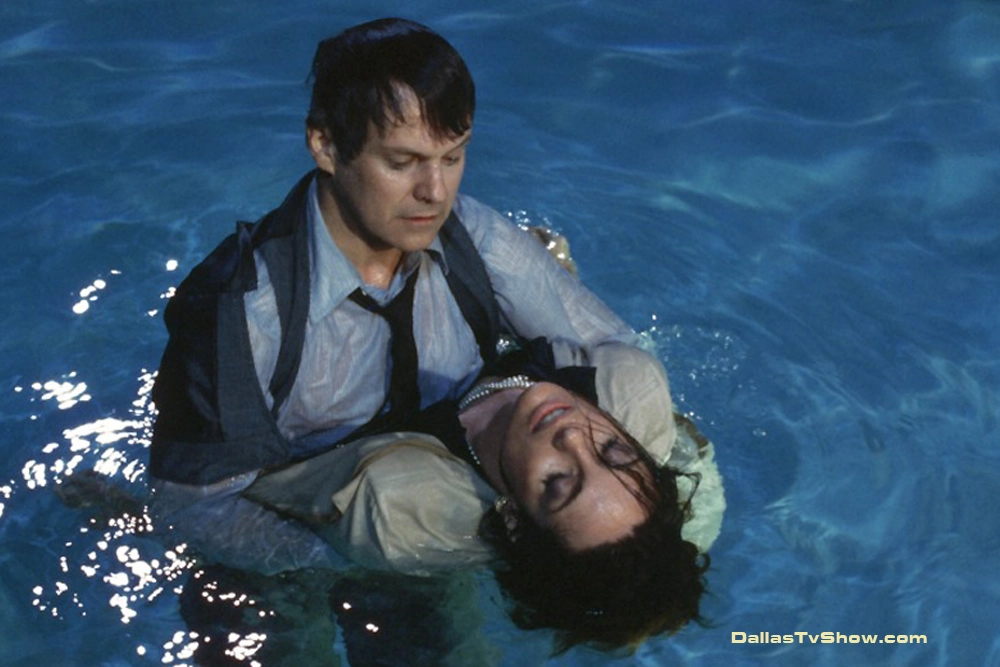
Sue Ellen in the pool — one of the alternate decoy images used to conceal the identity of the real victim.
Bobby’s return — and the version that never happened
Patrick Duffy’s return as Bobby Ewing created another secrecy problem for the producers. Bobby had died on screen, so when word spread that Duffy was coming back, the obvious question was how Dallas planned to pull it off. The answer viewers eventually got — that Bobby’s death and the previous season’s events had all been part of Pam’s dream — would become one of the most talked-about twists in television history.
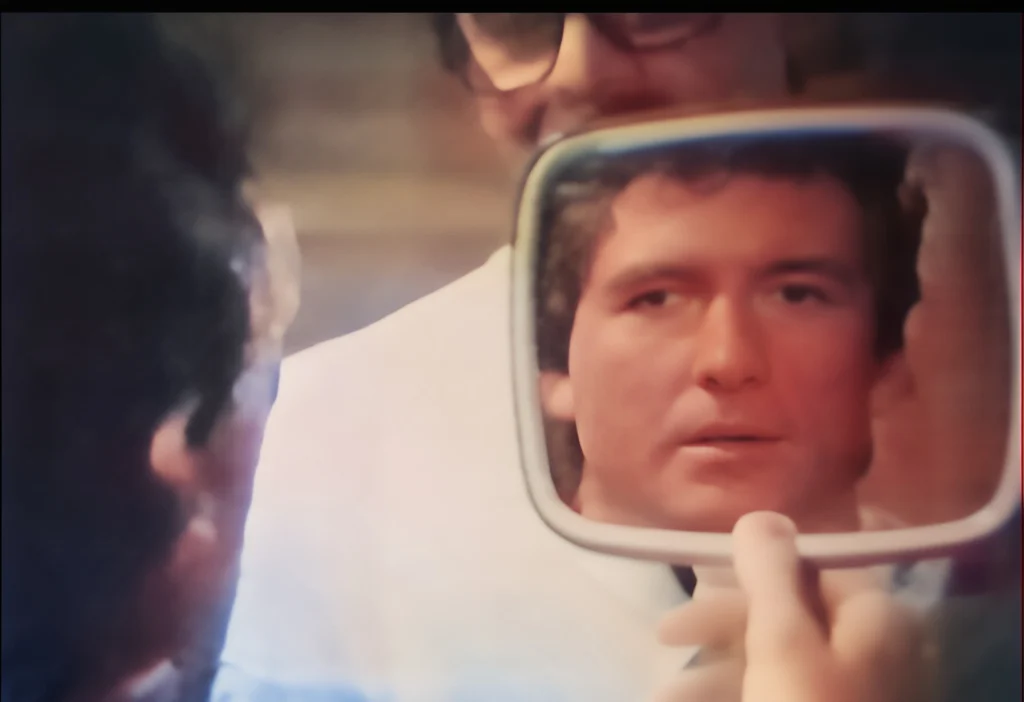
But before that reveal aired, the production helped fuel a very different theory. A decoy sequence was filmed in which bandages are removed from a man’s face, after which he stares at himself in the mirror. The implication was irresistible: plastic surgery, a false identity, an impostor, or perhaps Bobby himself returning after some hidden recovery. According to long-circulated reports, this material was shown to the press and encouraged speculation that Bobby might have been alive all along, recovering in secret before making a dramatic return.
That false trail was exactly the kind of thing that worked in the world of Dallas. It was just plausible enough. In a prime-time soap where secret schemes and unlikely reversals were already part of the storytelling language, a reconstructed Bobby or a mysterious lookalike sounded possible. The decoy did its job perfectly — it gave the press something to chase while the real explanation remained hidden.
And that is what makes the Bobby-return material so fascinating. The dream reveal is what entered television history, but the fake bandage-removal sequence reveals the strategy behind it. Dallas did not simply want to keep its secrets. It wanted to control the speculation around them.
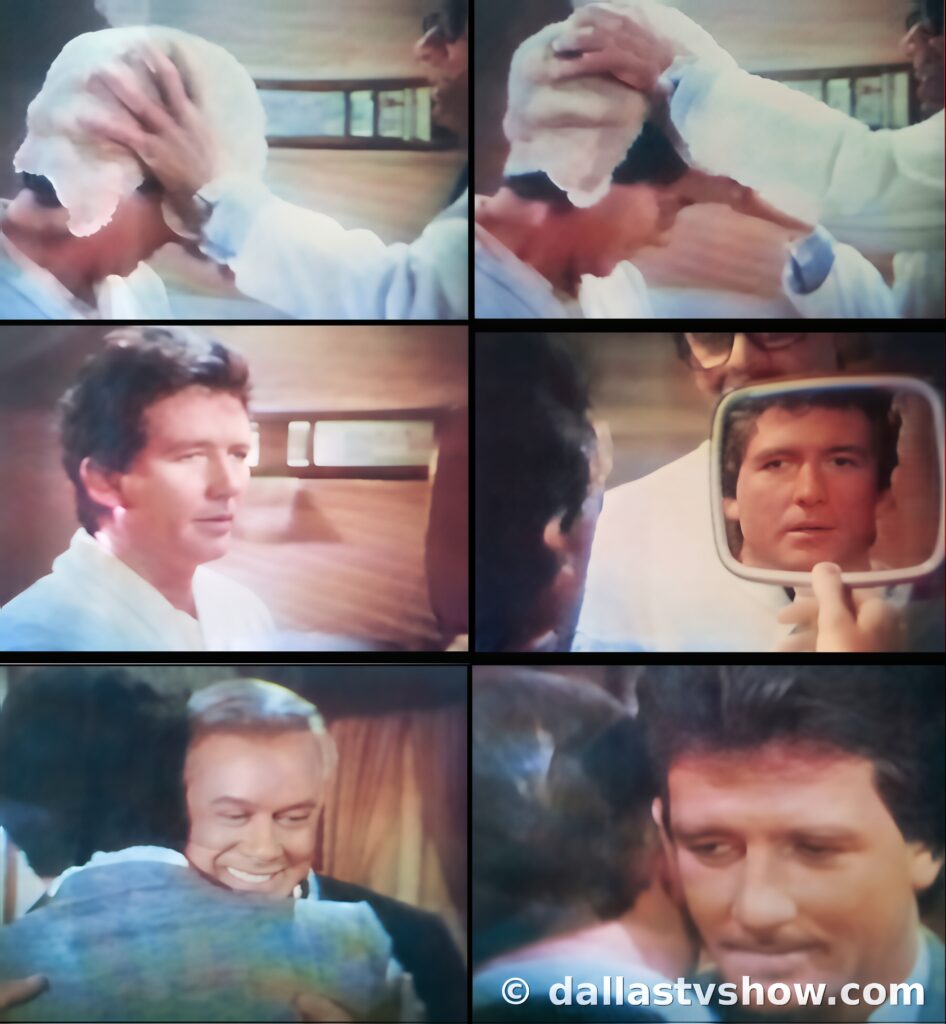
A masterclass in pre-internet spoiler control
Taken together, these moments show just how sophisticated Dallas was when it came to suspense. The producers understood that a cliffhanger did not end when the episode faded out. It lived on in the press, in fan theories, in leaked photos and in every rumor that circulated during the hiatus. If those stories could not be stopped entirely, they could at least be manipulated.
That is exactly what Dallas did. It filmed alternate shooters. It staged alternate victims. It created alternate explanations. It treated publicity as part of the storytelling process, turning rumor itself into one more layer of drama. In the process, the show became a pioneer in what would now be called spoiler management.
These unused scenes and surviving photographs still fascinate fans because they offer a glimpse behind the curtain. They are not part of official continuity, but they are undeniably part of Dallas history. They show how far the series was willing to go to preserve surprise — and how brilliantly it understood the value of keeping both the press and the audience just one step away from the truth.
In the world of Dallas, even the endings had doubles.